 Ingredient illustration
01
Cultivation research
Fungal strains. The wood they grow on. The conditions around them.
 Vita Hair · Capsules
Some can damage the strand. Others can send you shopping for the wrong answer. Here’s what to change before buying another bottle.

Keeping your gray changes the color plan. It doesn’t settle every question about the look and feel of your hair. Before reaching for hotter tools, a tighter style or another supplement, check these ten habits and buying decisions.
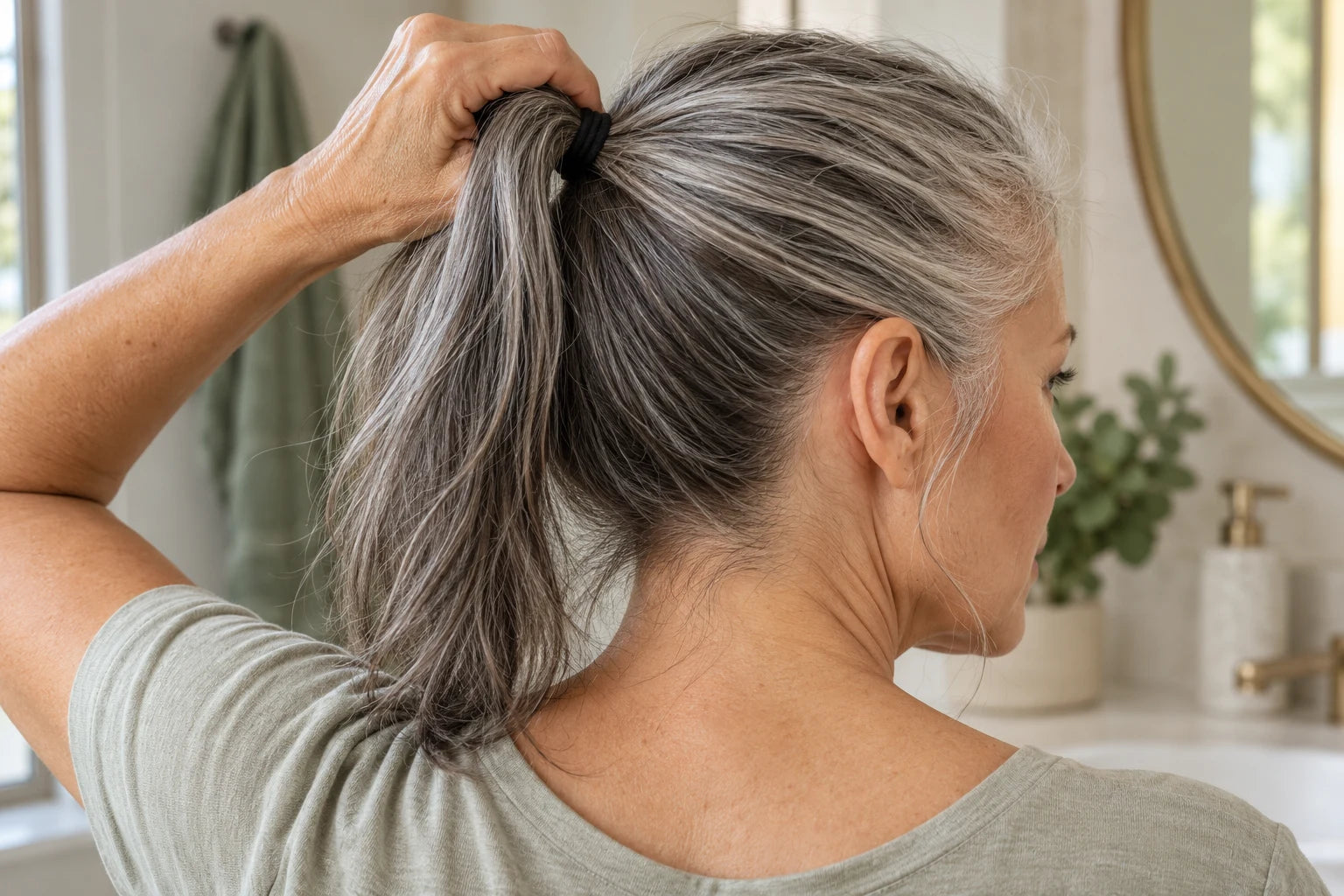
A tight bun can tidy the silhouette while putting repeated tension on the hair. Frequent pulling can cause breakage and, over time, traction-related loss.
Loosen the style. A hairstyle that hurts is too tight.
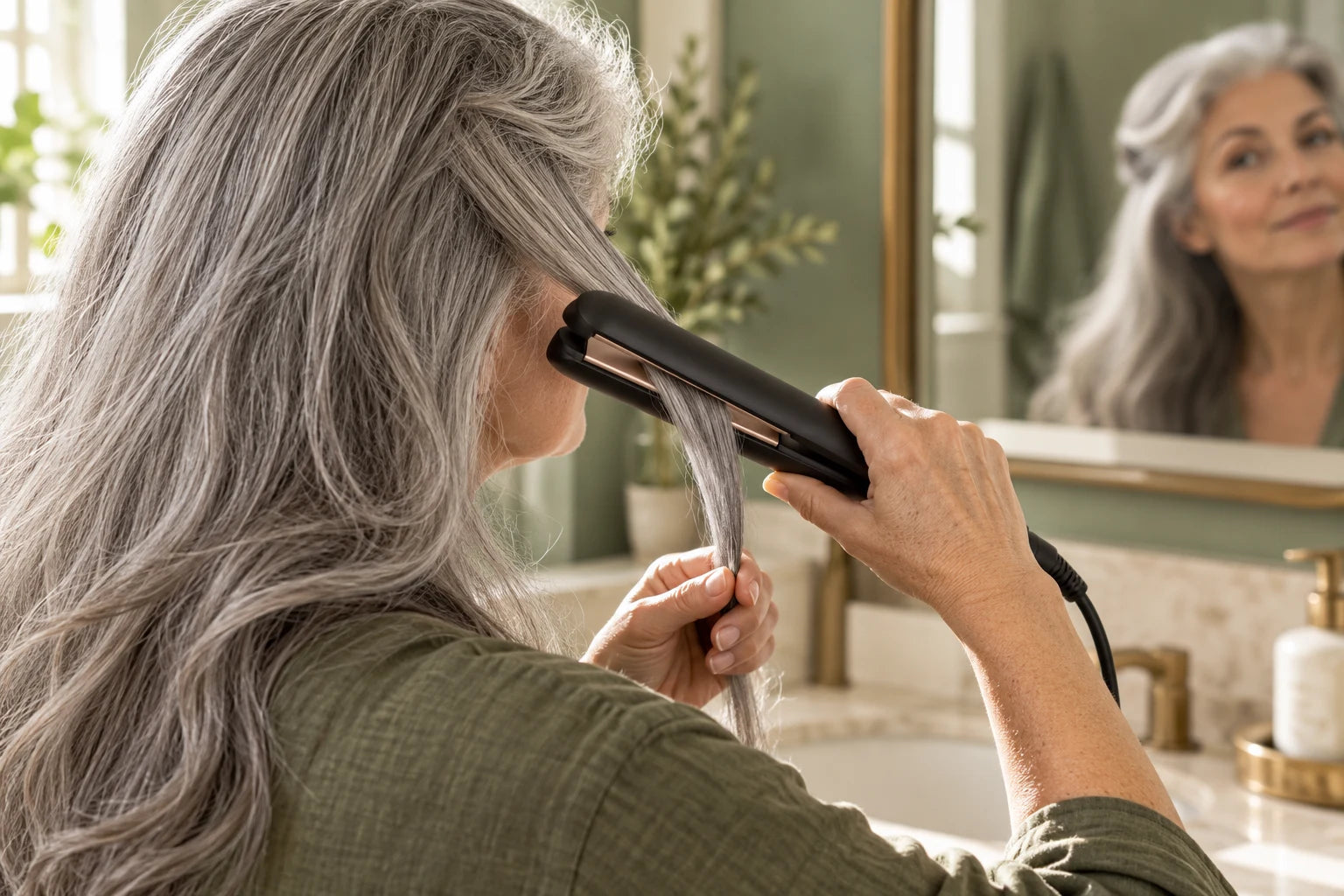
A hotter tool is not automatically a better styling tool. Repeated excessive heat can damage the hair shaft, whatever the hair color.
Use a lower setting, shorten contact and reduce heat-styling frequency.

Rubbing hard with a towel creates unnecessary friction. Wet hair needs gentle handling.
Wrap or blot to absorb water rather than rubbing back and forth.
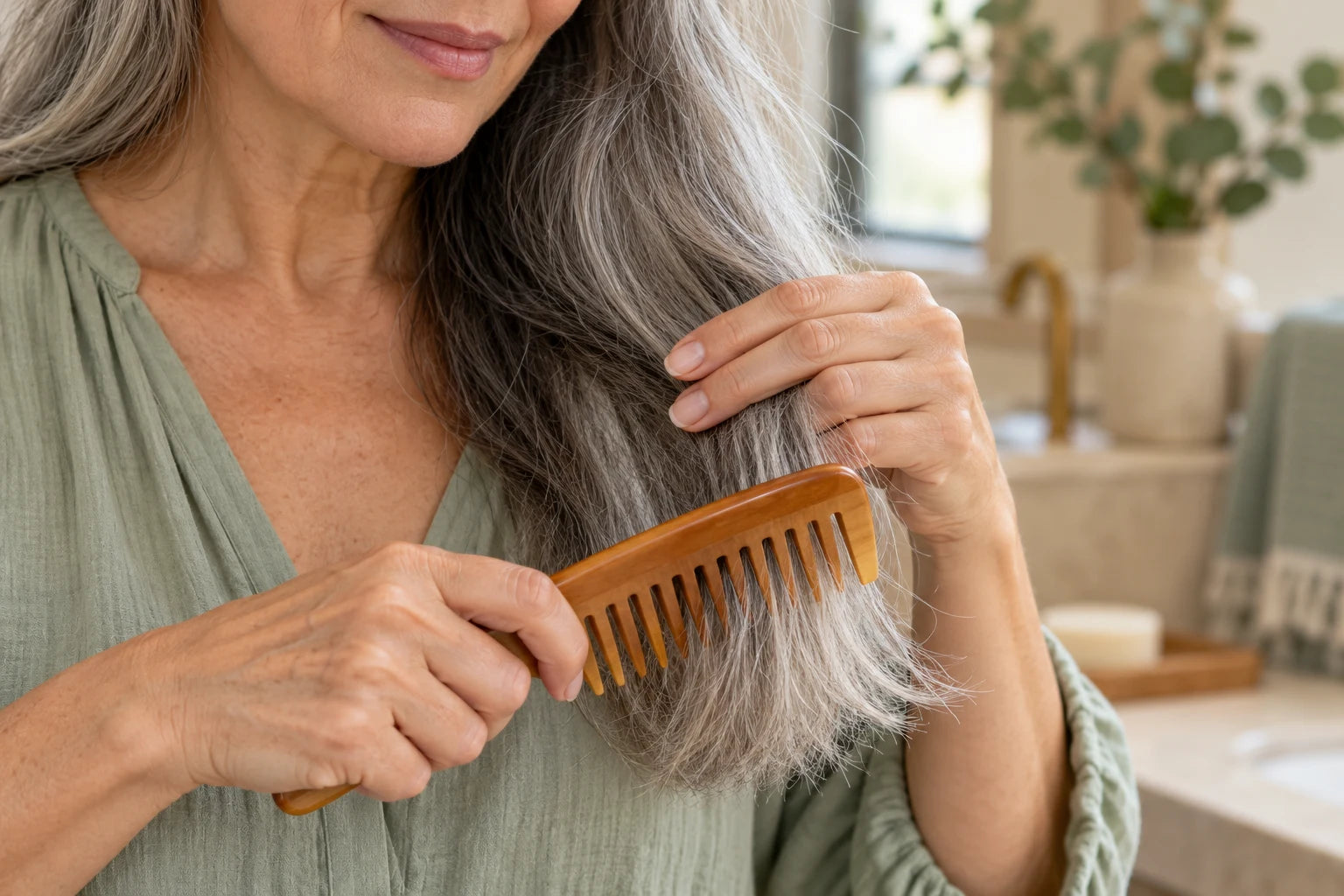
Tugging can turn a tangle into broken strands. Hair type matters: tightly curled or textured hair is generally detangled while damp; straight hair often benefits from drying a little first.
Detangle gently with a wide-tooth comb, working from the ends upward.

Conditioner and placement both matter. For fine or straight hair, dermatologists recommend concentrating conditioner on the ends; dry or curly hair has different needs.
Choose the product and application for your hair type.
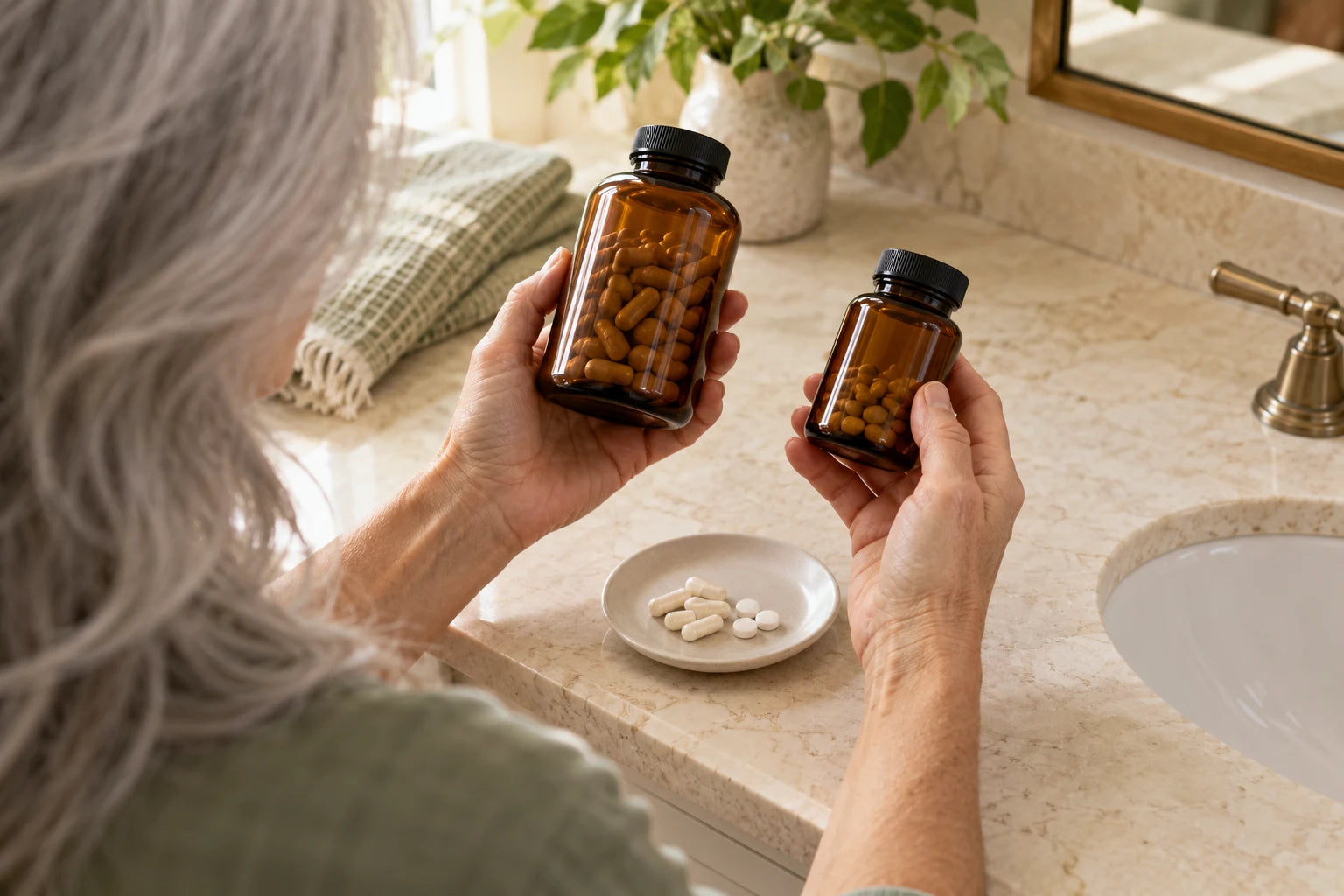
The next bottle may contain more of a nutrient without addressing a need. Biotin deficiency is uncommon in healthy mixed diets, and evidence for hair benefits outside deficiency is limited.
Check the reason for supplementation before chasing the largest number.
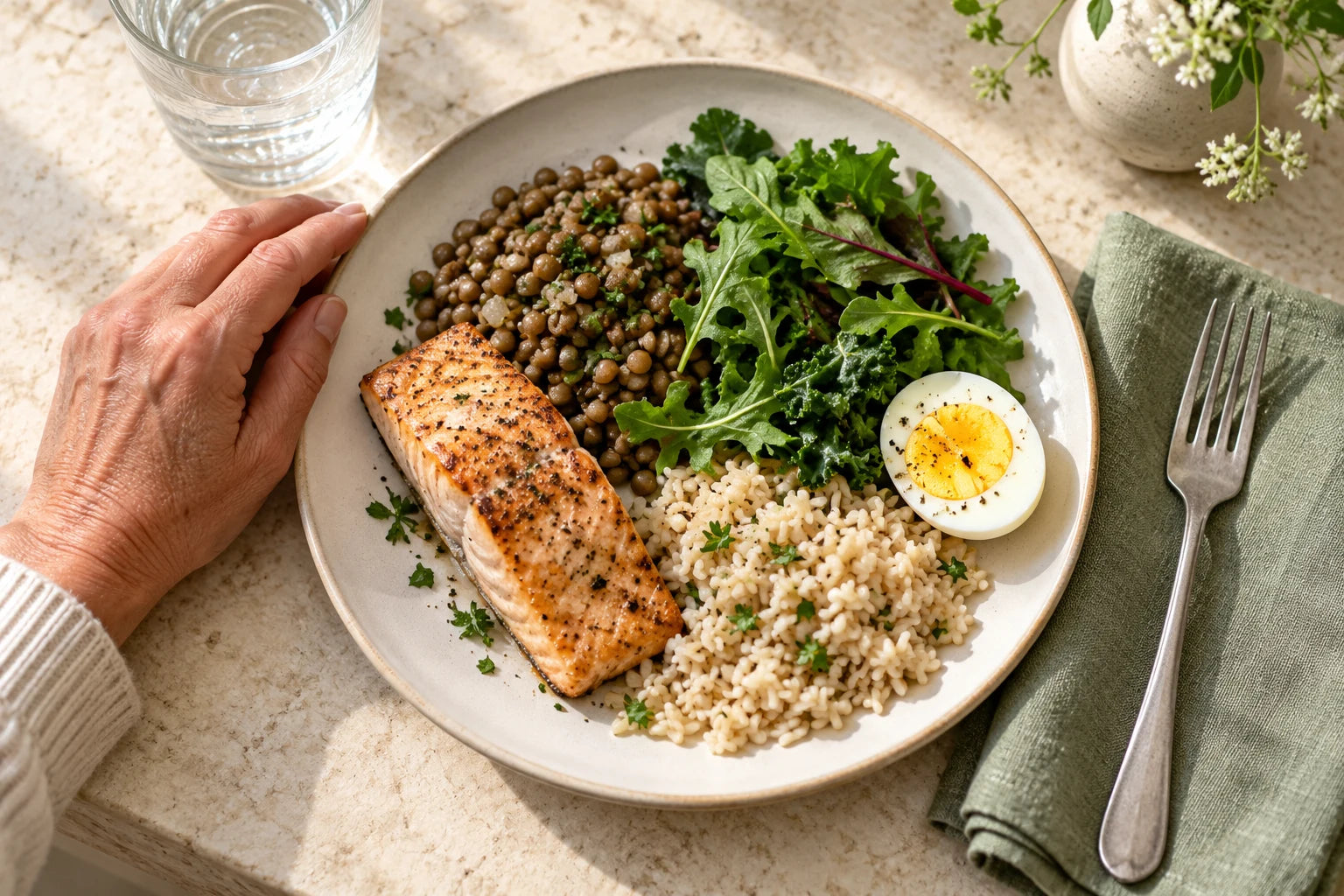
Too few calories, or too little of nutrients such as protein and iron, can contribute to hair loss. A hair-care purchase does not replace adequate nutrition.
Review the diet and seek appropriate advice if intake may be inadequate.
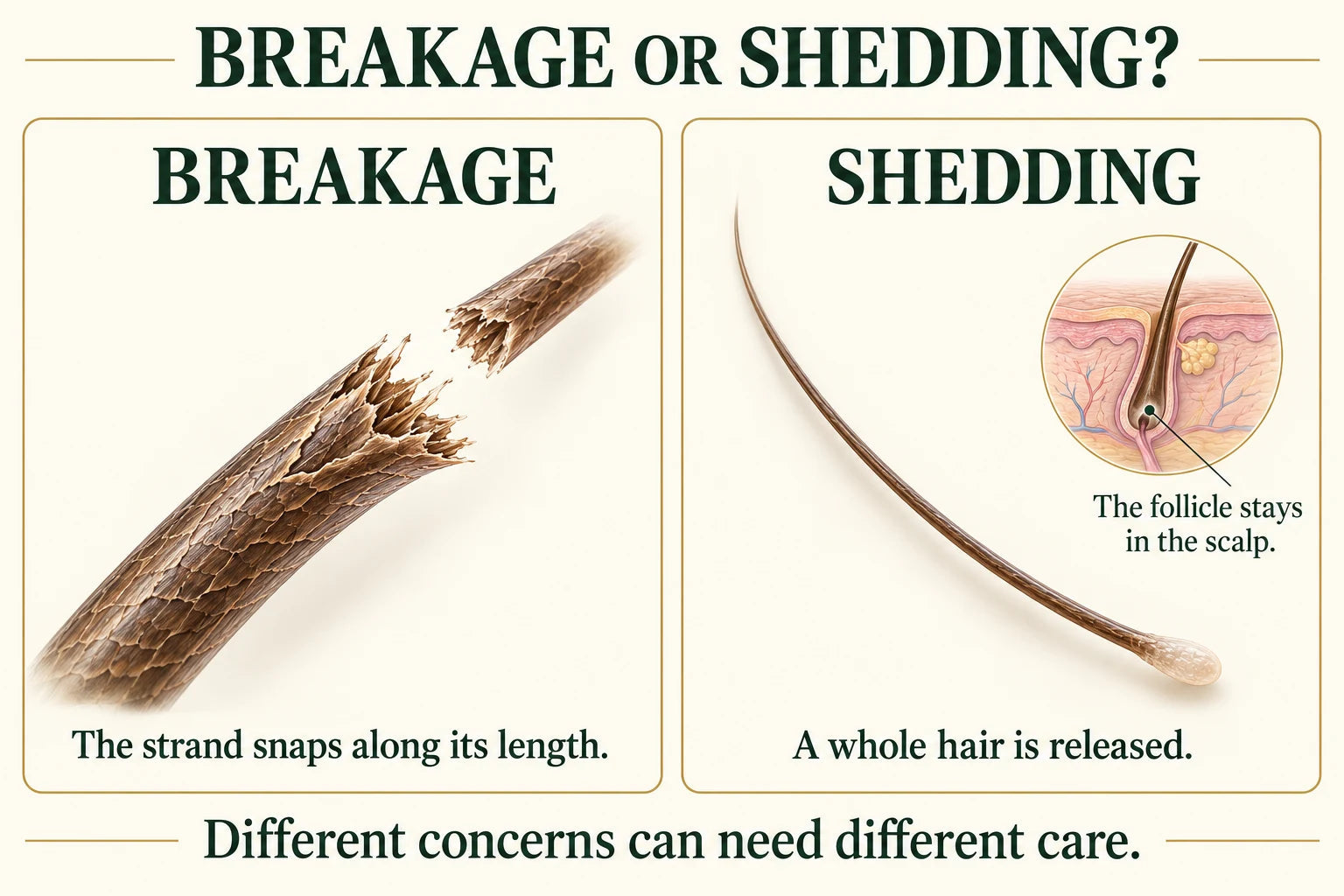
A strand that breaks along its length and a whole hair released from a follicle are different events. A sudden, persistent or unexplained change needs an appropriate assessment.
Work out what is changing before choosing another product.

Preparation belongs beside ingredient identity. Vita Hair’s micronized positioning describes finer milling; a change in powder preparation does not, by itself, establish better human absorption.
Compare the complete formula, preparation, evidence and serving instructions.


Look beyond a familiar plant name. A traceable maker, a complete label, relevant evidence and clear purchase terms give you something concrete to evaluate.
Ask who makes it, what is in it and what supports the promised benefit.
The handling habits above call for changes to the routine. Vita Hair is a separate supplement choice to evaluate on its own formula, evidence and individual suitability.
Cultivation research, raw-material selection, manufacturing and quality control form part of the company’s work.
Ingredient illustrationFungal strains. The wood they grow on. The conditions around them.
 Company facility
A manufacturing campus in Tai Po, Hong Kong.
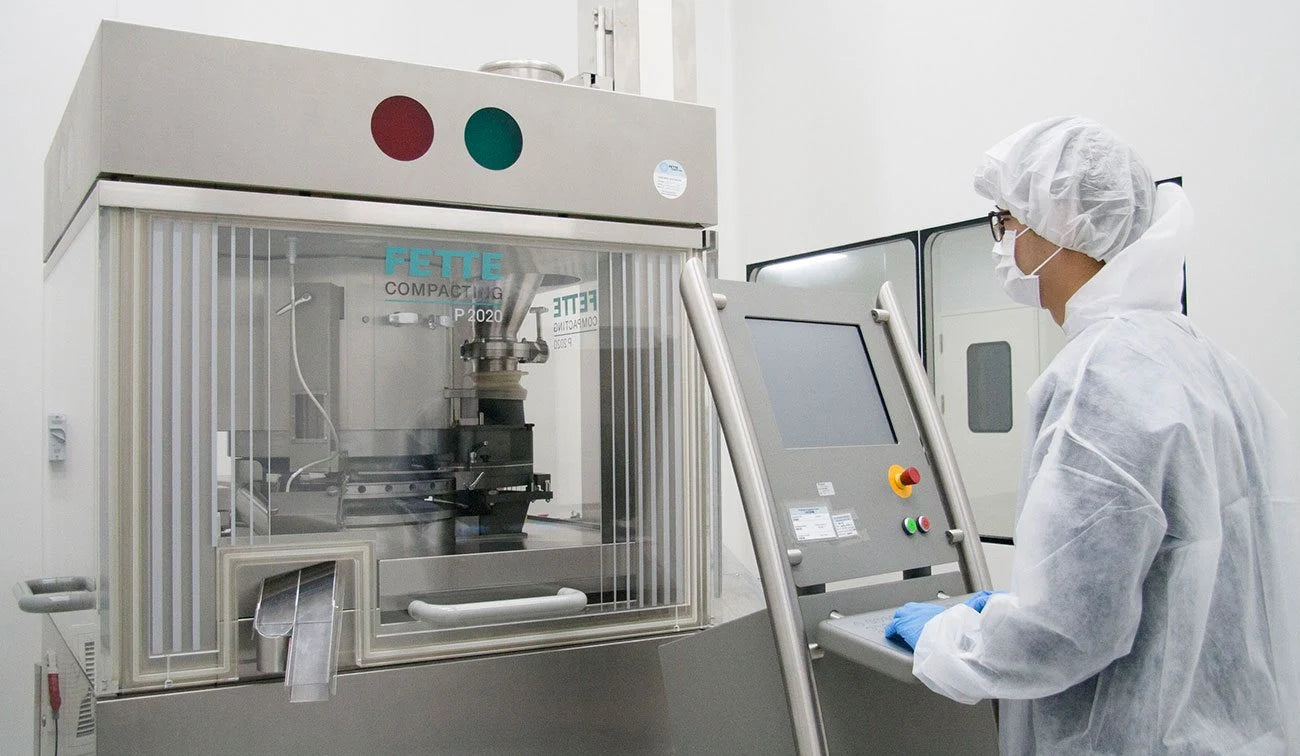 Company production
Dedicated production areas and the people who run them.
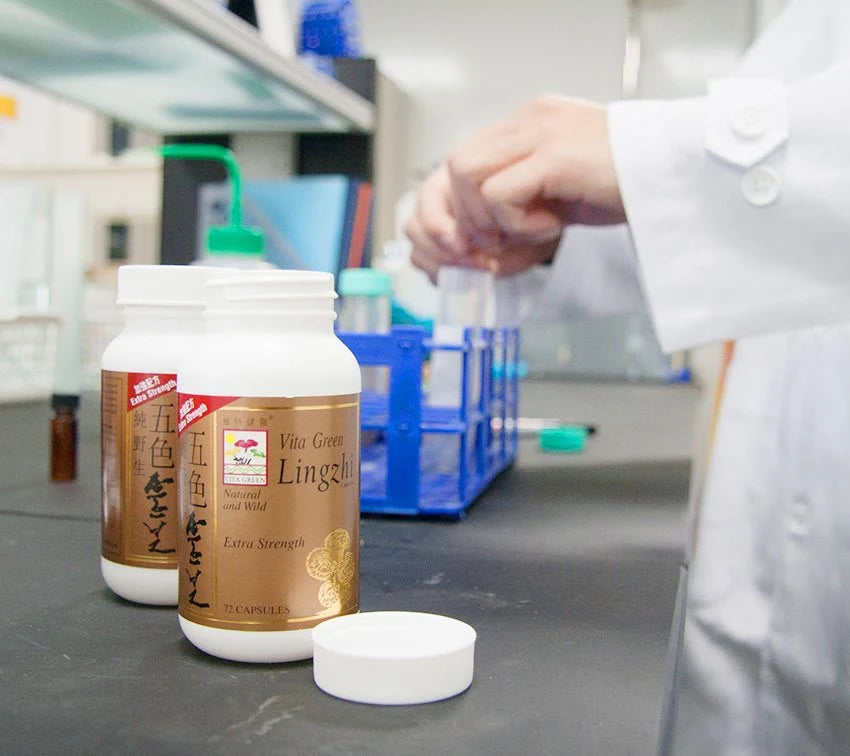 Company laboratory
A separate quality-inspection team in the published company process.
Lingzhi is a fungus that grows on wood. Vita Green’s published account of its work in Tianlin, Guangxi describes studying growing material, nutrition and different types of wood, then cultivating under a forest canopy.
The company started with its own experiments. The company describes its current model as supplying growing material and technical support to farmers, with an agreement to buy their harvests. It is a long-term cultivation relationship that reaches beyond buying a finished ingredient.
Company-level operations and source imagery. The cultivation account concerns lingzhi; it does not mean every ingredient in Vita Hair is grown by Vita Green. Factory and laboratory photographs show the wider business, including Lingzhi products.
A range with more than 30 years of history, from Vita Green, founded in 1993.
Brand-reported cumulative Vita Hair sales, confirmed by the owner in October 2026.
The current product story highlights ginseng, prepared He Shou Wu, Eclipta, Ligustrum and reishi, alongside a micronized preparation. The full current US bottle label remains the reference for all ingredients, amounts and directions.
 Ginseng
 Prepared He Shou Wu
 Eclipta
 LigustrumReishi

Free tracked US shipping comes from Hong Kong. Eligible first orders have a 30-day satisfaction policy from delivery, including opened products.
Review the full terms and the current bottle label before ordering.

 VITA HAIR · SINCE 1994
You’ve looked at the routine. Now look inside the bottle—and at the company behind it.
Routine photographs are AI-generated editorial illustrations, not customers or product results. This is educational buying and hair-care content, not an individual diagnosis. A capsule is not presented as repairing heat or styling damage, correcting every deficiency or treating every cause of loss. The current US formula, evidence and individual suitability govern the supplement decision.